


It can be challenging to determine the factors guiding Donald Trump one month after the US and Israel's campaign of military action on Iran.
However, it remains evident he has an eye on the global crude markets.
A comment – or online message – from the US president concerning his intentions used to trigger significant swings in oil prices, as investors leaped on indications the hostilities could intensify or come to an end.
However, in recent days, traders appear to be becoming increasingly sceptical about the significance of his remarks.
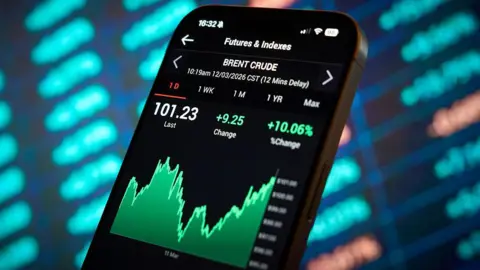
Oil was trading at approximately $72 a barrel (bbl) prior to 28 February, when the strikes on Iran commenced.
The week prior, it reached a high of $118 a barrel on 19 March and as of Friday afternoon was valued at slightly under $112 – markedly up from its pre-war price.
Below are several examples from the recent weeks where Trump and the markets appear to have influenced one another – with varying effects.
Navigate with the navigation button to proceed to the next slide.
"Energy prices have acted as a barometer for wider political and financial uncertainties, spiking when Trump's tone becomes hawkish and falling back when his rhetoric de-escalates," says one financial expert.
He adds that markets are understandably reactive to those messages, considering the substantial financial dangers that come with rising oil prices.
"Traders are trying to evaluate authentic uncertainty," he says. "Markets can appear jumpy or uncertain, but what they're really attempting is navigating geopolitical risk in real time, with oil positioned directly at the heart of that."
However, it can be difficult for investors to figure out how to trade, especially since some of Trump's comments seem aimed at affecting oil prices, instead of communicating policy, argues another investment advisor.
"As the saying goes, the first casualty of war is truth," he remarks. "I suspect much of the rhetoric back-and-forth around diplomatic progress, and the contrary, very much are aimed at just influencing the market price of oil."
Market Reactions Grow More Muted
On Thursday, minutes after US stock markets experienced their sharpest fall since the beginning of the Iran war, Trump announced talks with Iran were going "quite positively" and he was delaying planned attacks on Iran's oil facilities until at least 6 April.
However, the oil price continued to climb.
One currency strategist explains that investor responses are "growing increasingly subdued" because of the "significant disconnect" between Trump's reassurances and the lack of response from Tehran.
"Considering the appearances, a large number of market watchers do not foresee an imminent resolution to the conflict and financial markets continue to be apprehensive."
Another investment director says investors have also adapted to Trump "frequently changing tack at hints of political, equity market or financial stress".
"We are seeing a degree of wariness, or even frank suspicion, creeping in at the margins," he concludes.


